The problem: power on multi-day trips
Anyone who does multi day cycling trips knows the problem: your phone isn’t just a phone anymore. It’s your navigation, your camera, your way of capturing photos and video to look back on later and after a few days without an outlet, that little screen suddenly starts to feel precious.
I’ve been testing solutions like this for years, and the Cycle2Charge dynamo charger is one I’ve now carried on multiple trips. Time for an honest, practical review including the lesson that took me the longest to learn.
- Snelheid
- Gemak
- Duurzaamheid
- erg gemakkelijk in gebruik
- voor efficient gebruik je liever een powebank als tussenstap.
What is the Cycle2Charge, and how does it work
The Cycle2Charge is a dynamo powered charger that connects to a hub dynamo (like a SON or Shimano dynamo hub) and converts the generated power into a usable USB output for charging devices on the road.
In short, the principle works like this:
- The hub dynamo generates power as soon as your wheels turn
- The Cycle2Charge regulates and stabilizes that power
- Through a USB output you can charge a device or, as it turns out below, a powerbank works better
The idea is appealing: as long as you’re riding, you’re charging. No outlets needed, no solar panel requiring the right weather or orientation. Just pedal power.
The build is compact: a single USB-A port, housed in a sturdy plastic casing. No extra box on your handlebars, no loose cable dangling around everything’s neatly integrated into one point.
Installation and first experience
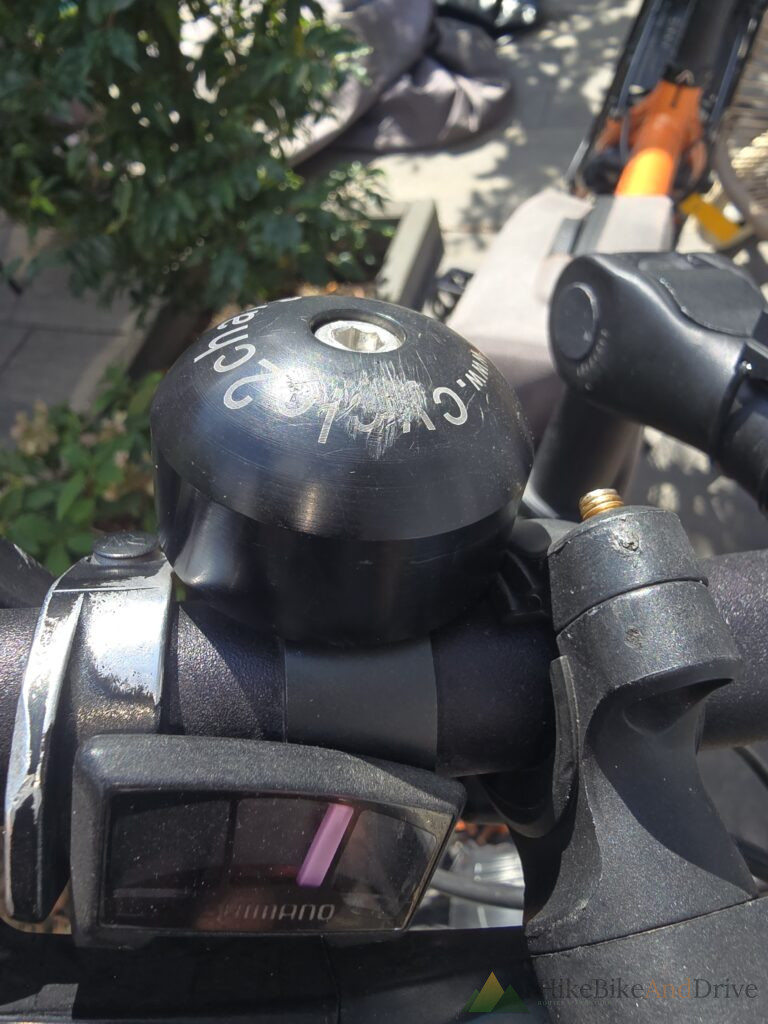
On mine, the Cycle2Charge is mounted in place of the headset top cap: instead of a regular stem top cap, the charger itself sits there, secured with a hex bolt, with the USB port just below the stem clamp within reach without having to stretch.
The wiring runs from the hub dynamo in the front wheel, up along the front fork to the top cap. On my Travelmaster setup, the cable is neatly zip-tied against the fork so nothing can come loose or get caught in the spokes while riding.
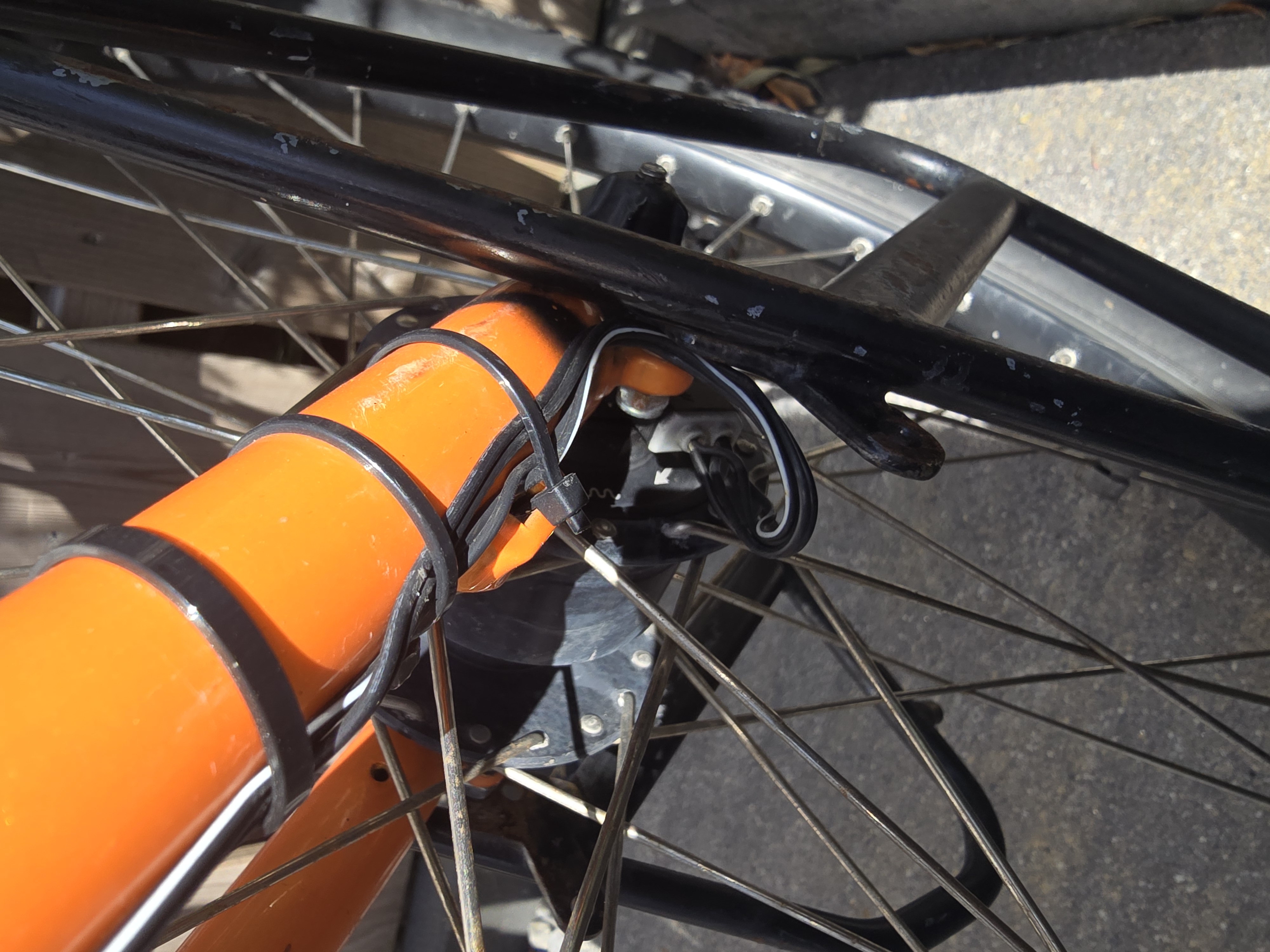
It’s a Easy fix you can put the wires into the Dynamohub connector and crosswire them with the wires of the light after that it is routing the wire to your steer and if you’r lucky into your stem and replace your screwcap for the cycle2carge.
Where it gets interesting is the first time you actually use it while riding. At low speed (think climbing or riding slowly through built up areas), a hub dynamo produces relatively little power. Only at a steady cruising speed lik 15 km a hour does the charging current really become reliable. like 500 Mah with a speed of 21 km or higher your charging power wil be like 1000 Mah a hour and that is pretty good.
Key point: why a powerbank intermediary works better than direct charging
This is the most important lesson from my tests, and the reason I structured this review the way I did: don’t connect your phone directly to the Cycle2Charge.
Why not? A dynamo doesn’t deliver constant power. The moment you slow down at an intersection, on a climb, a quick stop for a photo the current drops or cuts out. Your phone notices: it keeps switching between “charging” and “not charging,” and that fluctuating charge behavior isn’t just inefficient, it’s also hard on the battery in the long run.
The solution is simple but effective: charge a powerbank via the Cycle2Charge, then charge your phone from that powerbank. The powerbank acts as a buffer: it handles the dynamo’s fluctuating, irregular power without issue, and in turn delivers a stable, constant current to your phone whenever you want it.
The benefit is twofold:
- Battery health: your phone gets a clean, constant charging current instead of being repeatedly cut on and off
- Flexibility: you don’t have to be riding at the exact moment you need to charge the powerbank already has energy stored up from earlier that day.
Real world results from my own trips
I’ve used the Cycle2Charge during, among others, the LimbRiding the Ghost Railway: Kerkrade to Sankt Vith on the Vennbahnurg–Luzern expedition.
A few practical observations:
- 6 hours for refilling a 20000 Mah powerbank after a night use.
- No problems in the rain all do i have to say it is a bit scary, but even when i was forgotten to close the charger in the rain i did not have any issues.
- If i had a Dynamo hub on my gravelbike I would have bought the same Charger for this bike.
- It is very sturdy, mine had a bit of hammering and stil works like day 1.
Who this is worth it for
The Cycle2Charge isn’t a musthave for every cyclist. It’s most valuable for:
- Multi day bikepackers and touring cyclists who go days without an outlet
- People who rely heavily on phone navigation and burn through battery faster as a result
- Content creators on the road (photo/video) with extra power demands beyond normal use
For a weekend trip with the occasional outlet in sight, it’s probably overkill a well charged powerbank alone is often enough there.
Conclusion
After many trips with the Cycle2Charge, my conclusion is: it works, as long as you use it smartly. Charging your phone directly is the most obvious way to use this system and also the least sensible. Put a powerbank in between, and you have a reliable, silent power source that works all day without you having to think about it.
For anyone doing serious multi-day trips who doesn’t want to depend on finding an outlet, this is one of those investments you only need to make once.